Education’s Anonymous
Artists all over the world are teaching workshops from their home or local studios. You can experience this in a classroom setting, or receive access to an instructor that lives nowhere near you via zoom. This is great for artists because they are able to share their unique perspectives and also give them another stream of income, so that they can continue working, you can have more insight, and we can live in an awesome world that promotes the arts.
I’m picturing a world where one day we will completely get rid of the hierarchical institution OF college or university. We are in the midst of an era of information sharing and class taking via zoom and youtube where the quality of education is outstanding. Artists all over the world are teaching workshops from their home or local studios. You can experience this in a classroom setting, or receive access to an instructor that lives nowhere near you via zoom. This is great for artists because they CAN share their unique perspectives and also give them another stream of income so that they can continue working, you can have more insight, and we can live in an awesome world that promotes the arts. A lot of times by taking a workshop, you get information about free, open-source resources to use later. I like this idea as well because I feel like in the past, a lot of information was gate-kept or inaccessible to keep people out, but also preserve the knowledge that artists have so that they can make money off of their secrets. This approach is basically the opposite where knowledge is shared, and people lift each other by exchanging what their best at. I feel like in the future this will allow for innovation through community. I have been taking a lot of workshops that have been beautifully and expertly created! After leaving school, I thirst for settings where people are making art together side by side as a group. There is something very special about Parallel Play, especially as an adult. Two of those workshops that I was really excited about that have helped me with my digital art and zine practice was Visual Poetry by Lisa Huffaker + Riso Animation by Kelli Anderson. These workshops also helped me build confidence. Sometimes expressing your ideas with supportive people out loud and getting feedback is way more valuable than working independently in a studio.
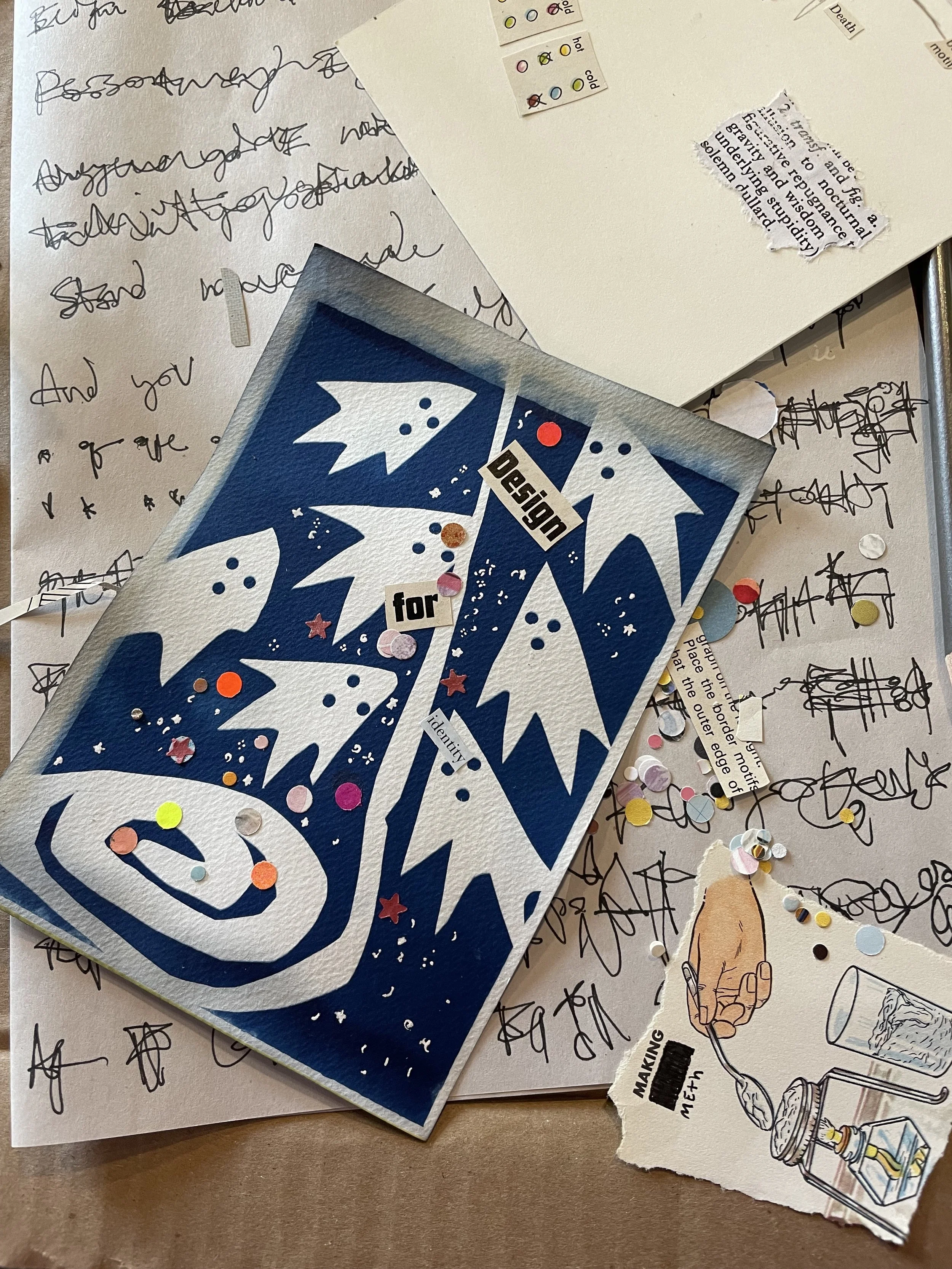
Visual Poetry by Dallas artist, Lisa Huffaker. In this workshop, we explored the world of erasure and curated poetry to create new and subversive messages. As a visual artist, but aspiring designer, incorporating language into imagery can be a challenge, but I think that poetry is a muscle that graphic artists need to exercise. Learning how words interact with images is trickier for me because finding the right word is just hard! That’s one of the reasons why I wanted to start this blog to get practice!
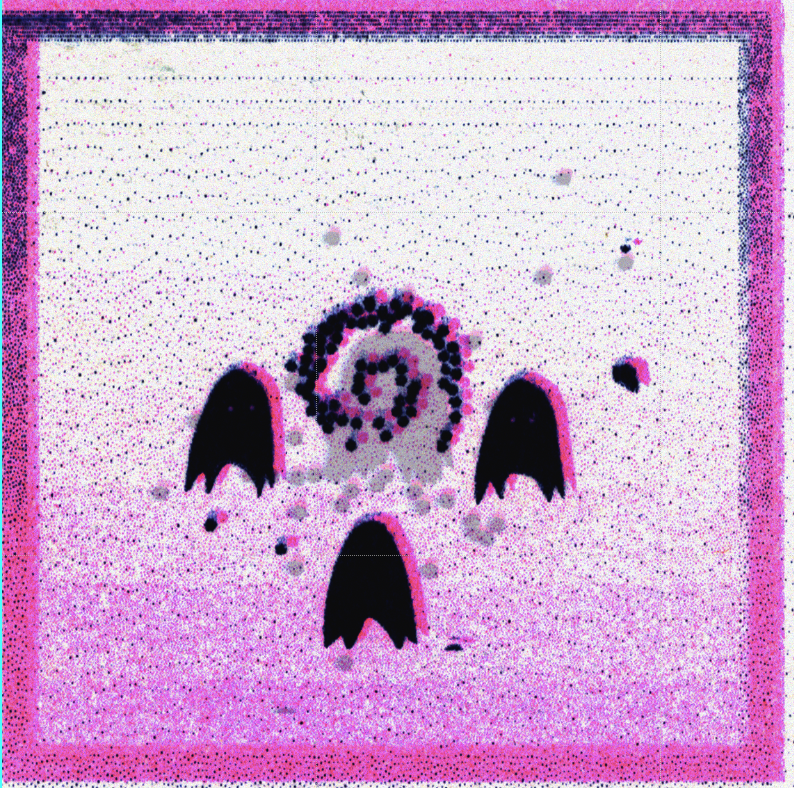
The other workshop that I took this year so far, was Riso Animation by Kelli Anderson. This was a process that I had no idea existed until recently, but when I discovered this was a class, I had to take it! I saw that a girl that I met at Dallas Zine Fest had taken the workshop and the work she shared was so fucking cool. I wanted to take the class to strengthen my knowledge of Riso printing, Photoshop, and printing in general. This is a concept that is unique to Kelli so I felt that the class was very special. She is located in Brooklyn, New York so I feel lucky that this class was accessible to me through Zoom. The class was extremely useful not only for learning this unique technique but also for helping me become more proficient in creating digital media. There were some other people in the class, including Kelli’s partner, Keegan, who was extremely knowledgeable on the topic of analog printing, so it led to some really interesting discussions. Sometimes just listening to a group of people talk in code about something complicated to each other for a long time can make it easier to understand. Kind of like watching a foreign film.
A benefit OF taking workshops from freelance artists vs. at an institution is that you know that the information is genuinely what the teacher is passionate about and is an expert on. The lesson doesn't need to be filtered through a bureaucracy, and they're just giving it straight to you. You also know that the tuition is going to them. Usually, they are dealing with material costs to make the class happen, so that is something to keep in mind, but it's not like giving a school an exuberant amount of money and then finding out your professor has to have 2 other jobs just to live. Both Lisa and Kelli were very passionate and patient instructors. They brought unique insight to my art, and I think taking the classes made me think about my work from a new perspective. I truly think that all artists should continue to take workshops from other artists to not only strengthen their work but support each other and build community. Please comment, I would love to hear your opinions on a reformed educational future where skill sharing is seen as higher education. 
Here are some great places in Dallas, TX where you can take Artist-run workshops:
Riso Animation Study ~ Ghost Flowers

Nihilism in Art as an Artist (Why I Love Zines)
I find this competitive nature of not just the art world, but society in general to be exhausting. I think most people my age do. For a lot of artists, like myself, zines hold space for a feeling like this. It is a space with no expectations and it can be anything or nothing, all wrapped up in something personal and tangible, like a book. Because of this, it is an object that rids itself of capitalistic competition in exchange for brother and sisterhood and community.
I don’t think I’ve ever seen more mental breakdowns, witnessed more self-doubt, or seen more feelings of depreciation than when I was in art school. But, at the same time, it was one of the best experiences of my life. I think myself, and my classmates all had this feeling of “why am I doing this? We’re going to be poor when we get out of here..” Not to mention the odds that my whole class was going to move on and continue to be an artist outside of school was very small. Why were we doing this?? Going thousands of dollars into debt to go into a field that is oversaturated, not really 100% beneficial to society, in a field that is known for not being lucrative at all?? We were doing it because for some reason we needed to. Within ourselves. And that’s a feeling that you can’t explain to other people who aren’t artists.

Leaving school, I think for everyone, is very difficult, and for an artist, it can seem challenging when there is no clear-cut path. When you leave accounting school, you go to work for an accounting firm. When you leave law school, you work at a law firm. When you leave medical school, you become a nurse or a doctor and work at a hospital. But then again, as someone who is not a part of the corporate world at all, there are many “normal” jobs that I don’t understand. For example, what do business people do? Business? I didn’t know what that meant as a child and I honestly still have no clue what that means…
The number of experiences for this varies for the number of people on earth, but going from school to the professional world is such an intense wake-up call. I’m like “Oh, people don’t want my silly undergrad work about fake Facebook pages in their art boogie ass art gallery?” “They mainly want large fake Jackson Pollock paintings?” “I really just wanted to make a video of me pretending to eat spaghetti made out of sliced-up steel sheets or a video of people pouring water on my head.” “That doesn’t make money??”

I know it sounds silly, but I find it hard that people don’t want to see you be as weird as you really are. You have to wake up early, and find something that will keep your lights on, and it's probably going to take up all your time. When am I supposed to even work on performances that are going to make me the next Marina Abramovic? Well, there’s only one of her and a million of us that want to be just like her. 9 times out of 10 I feel selfish for dreaming, but grateful for what I have.

I find this competitive nature of not just the art world, but society in general to be exhausting. I think most people my age do. We’re not FINANCIAL GENIUSES like Boomers. And we’re not Technological pioneers like Millennials. What are we? I think a lot of us are thinking it doesn’t matter. For a lot of artists, like myself, zines hold space for a feeling like this. It is a space with no expectations and it can be anything or nothing, all wrapped up in something personal and tangible, like a book. Because of this, it is an object that rids itself of capitalistic competition in exchange for brother and sisterhood and community. They become a tool to navigate our world with sheer intentions. Other art forms do this as well of course, but there is something about a homegrown zine that is the essence of what pure intentions of art-making are. I love every single one, especially the shitty ones.